
The choice between a single-breasted and a double-breasted suit is more than a matter of personal preference—it is a decision that reflects one’s understanding of style, occasion, and tradition. Both styles have their unique histories, design elements, and appropriate settings. This article will delve into the distinct characteristics of single-breasted and double-breasted suits, providing you with the knowledge to make an informed choice for any event.
Table of Contents
What Is a Single-Breasted Suit?
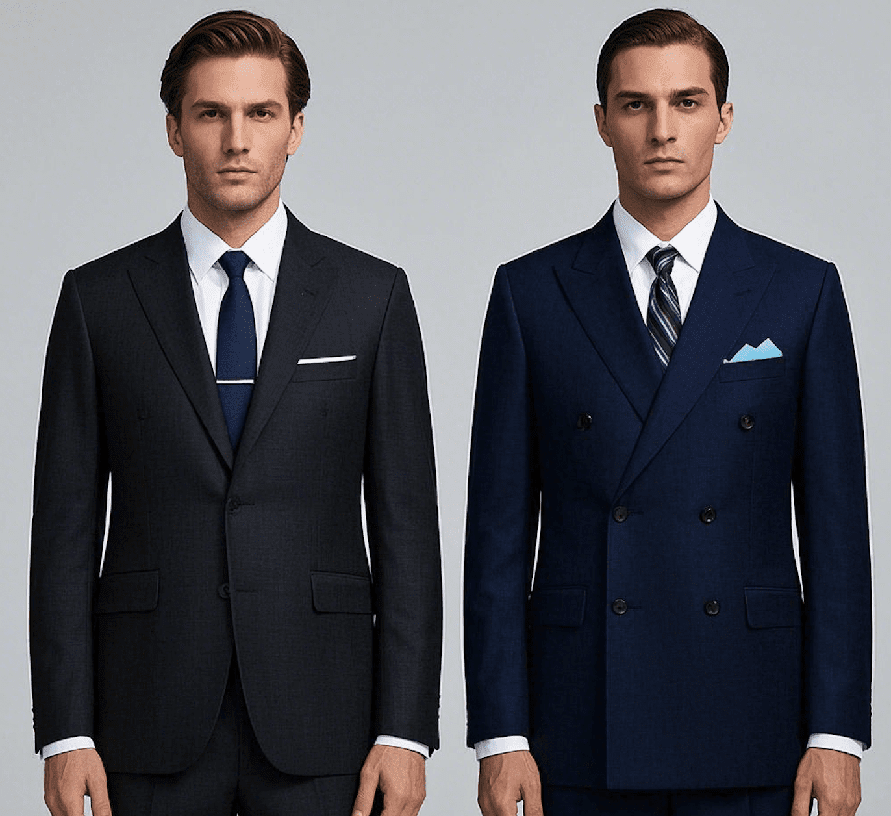
A single-breasted suit is a classic and versatile style of men’s tailoring characterized by a front closure with a single row of buttons, typically ranging from one to three. Its clean, minimalist design features a straightforward overlap of the front panels, often paired with notch lapels, which are versatile and timeless. Originating in the mid-19th century as a practical adaptation of military uniforms, the single-breasted suit has become a cornerstone of modern menswear, suitable for a wide range of occasions—from business meetings to casual outings. Its streamlined silhouette and understated elegance make it a wardrobe staple for men seeking a balance of sophistication and practicality.
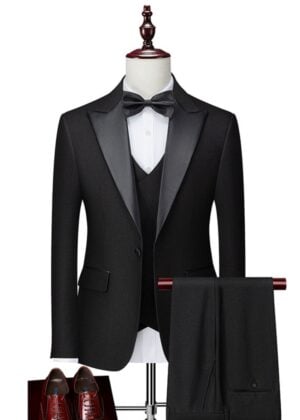
Single Breasted One Button Suit
A single-breasted, one-button suit is a refined option, perfect for black-tie events and other formal occasions. Its minimalist design, featuring a single-button closure, creates a clean and elegant silhouette that exudes sophistication.
Often paired with peak or shawl lapels, this suit style uses luxurious materials like satin or grosgrain for added refinement. It’s particularly flattering for slender or athletic body types, making it a timeless choice for those seeking a polished and confident look.

Single Breasted Two Button Suit
The single-breasted two-button jacket is the most popular and versatile style in modern menswear, suitable for a wide range of occasions from business meetings to semi-formal events. While these jackets feature two functional buttons, it is customary to fasten only the top button to maintain a balanced and natural drape. Fastening both buttons can disrupt the silhouette, making the jacket appear tight or ill-fitting.
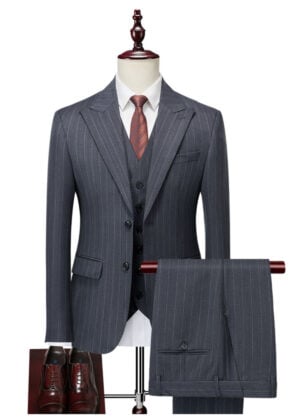

This design is celebrated for its adaptability and timeless appeal. Single-breasted two-button jackets typically feature notch lapels for a classic look, though peak lapels can be chosen to create a more commanding presence by emphasizing the shoulders and adding a formal touch. Its streamlined silhouette flatters most body types, making it a wardrobe essential for any man.
Single Breasted Three Button Suit
While single-breasted three-button jackets are available, they are less common in modern menswear compared to two-button styles. They can sometimes feature shorter lapels, but many are designed with a “3-roll-2” lapel, where the top button is decorative, creating a look similar to a two-button jacket. For optimal appearance, it’s best to fasten only the middle button or occasionally the top two buttons, leaving the bottom button undone. Fastening all three buttons can disrupt the jacket’s proportions and natural drape, making it appear overly tight or bulky.
What Is a Double-Breasted Suit?
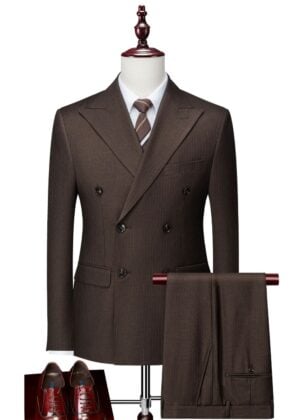
A double-breasted suit is a classic menswear design characterized by overlapping front panels and two parallel rows of buttons. Typically, it features peak lapels, which enhance the jacket’s formal and structured aesthetic. Button configurations like 4×2 and 6×2 are common, with the 4×2 style being the most traditional and widely used.
Rooted in the early 19th century, the double-breasted suit draws inspiration from military uniforms and later evolved into a staple of civilian formalwear. Known for its sophistication and elegance, it is regarded as more formal than single-breasted styles. This makes it an ideal choice for business settings, evening events, weddings, and other high-profile occasions where polished and refined attire is essential.
4 x 2 Double Breasted Jackets
The four-button double-breasted suit is the most common and versatile style. It features two functional buttons on the outer row and two decorative buttons on the inner row. This design strikes a balance between formality and practicality, making it suitable for both business meetings and formal events. Its structured silhouette is particularly flattering for taller individuals.

6 x 2 Double Breasted Jackets
The six-button double-breasted suit is the most formal and traditional style, often featuring a ‘Y-shaped’ configuration with two functional buttons (6×2) or three functional buttons (6×3). This design creates a bold and imposing look, making it ideal for black-tie events, evening weddings, and high-stakes business meetings. Its broad lapels and structured silhouette exude authority and sophistication, particularly when worn by taller, athletic individuals, as it accentuates the physique and commands attention.

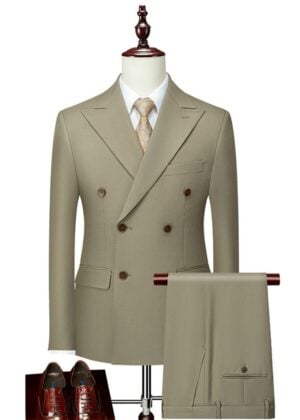
Single vs. Doubled-Breasted Suit
Design and Structure
The most obvious difference between single-breasted and double-breasted suits lies in their design and structure. Single-breasted suits feature a single row of buttons, typically ranging from one to three, and are often paired with notch lapels, which are versatile and timeless. This design creates a clean, minimalist appearance that is easy to wear and style.
In contrast, double-breasted suits have two parallel rows of buttons, usually with one functional row and one decorative row. They are characterized by peak lapels, which are broader and more angular, adding a sense of formality and grandeur. The overlapping front panels of a double-breasted suit create a structured, boxy silhouette that exudes authority and confidence.
Formality
Single-breasted suits are highly versatile, making them suitable for a wide range of occasions. A two-button single-breasted suit is the go-to choice for business settings, while a one-button suit can be dressed up for formal events or dressed down for casual outings. Their adaptability makes them a practical option for everyday wear.
Double-breasted suits, on the other hand, are inherently more formal. They are best reserved for occasions that demand a higher level of sophistication, such as black-tie events, evening weddings, or high-stakes business meetings. Their bold design and structured silhouette make them a powerful statement piece, ideal for those looking to command attention and project authority.
Body Type Considerations
Single-breasted suits are universally flattering and suitable for all body types. Their streamlined design creates a balanced and proportional silhouette, making them particularly ideal for individuals with a broader build or shorter stature. The vertical line created by the single row of buttons helps elongate the body, creating a slimming effect.
Double-breasted suits, with their broader lapels and structured design, are best suited for taller or leaner individuals. The added volume in the upper body can enhance the appearance of broader shoulders, creating a more commanding presence. However, shorter individuals can still wear double-breasted suits by opting for a shorter jacket length and avoiding overly wide lapels to maintain proportion.
Styling and Versatility
Single-breasted suits offer greater versatility in styling. They can be paired with a variety of shirts, ties, and shoes to suit different occasions. For example, a white shirt and solid tie create a classic business look, while a patterned shirt and no tie can achieve a smart-casual vibe.
Double-breasted suits, while less versatile, make a strong style statement. They are best styled with crisp white shirts and conservative ties to maintain their formal appeal. Accessories like pocket squares and cufflinks can further elevate the look, adding a touch of sophistication.
Cultural and Regional Preferences
In Western fashion, single-breasted suits are the standard for business and everyday wear, while double-breasted suits are often associated with traditional British tailoring and formal events. In recent years, however, double-breasted suits have seen a resurgence in fashion-forward circles, particularly in Europe, where they are styled in bold colors and patterns for a modern twist.
Summary of Key Differences
| Aspect | Single-Breasted Suit | Double-Breasted Suit |
|---|---|---|
| Design | Single row of buttons, notch lapels | Two rows of buttons, peak lapels |
| Formality | Versatile; suitable for formal and casual | More formal; ideal for black-tie events |
| Body Type | Flattering for all, especially broader builds | Best for taller or leaner individuals |
| Styling | Highly versatile; easy to dress up or down | Bold and structured; best for formal occasions |
| Cultural Preference | Standard for business and everyday wear | Associated with traditional British tailoring |
Conclusion: Making the Right Choice
The decision between a single-breasted and a double-breasted suit ultimately depends on the occasion, your body type, and your personal style. Single-breasted suits offer timeless versatility, while double-breasted suits exude elegance and authority. By understanding the unique characteristics of each style, you can confidently choose the perfect suit for any event.
Remember, the key to looking sharp lies not only in the suit you choose but also in how well it fits. At Suits Mania, we offer a wide range of affordable suits to suit every style and occasion. Trust SuitsMania to provide quality suits that elevate your look for life’s most important moments.
Frequently Asked Questions (FAQ)
-
Can I wear a double-breasted suit to a job interview?
Yes, but only if the company culture is formal. A single-breasted suit is a safer choice for most interviews.
-
Is a single-breasted suit appropriate for a wedding?
Absolutely! For daytime weddings, opt for lighter colors like beige or light gray.
-
Can shorter men wear double-breasted suits?
It’s possible, but choose a shorter jacket length and avoid overly wide lapels to avoid overwhelming your frame.
-
How do I care for my suits?
Always hang them on wooden hangers, steam instead of ironing, and dry clean only when necessary.